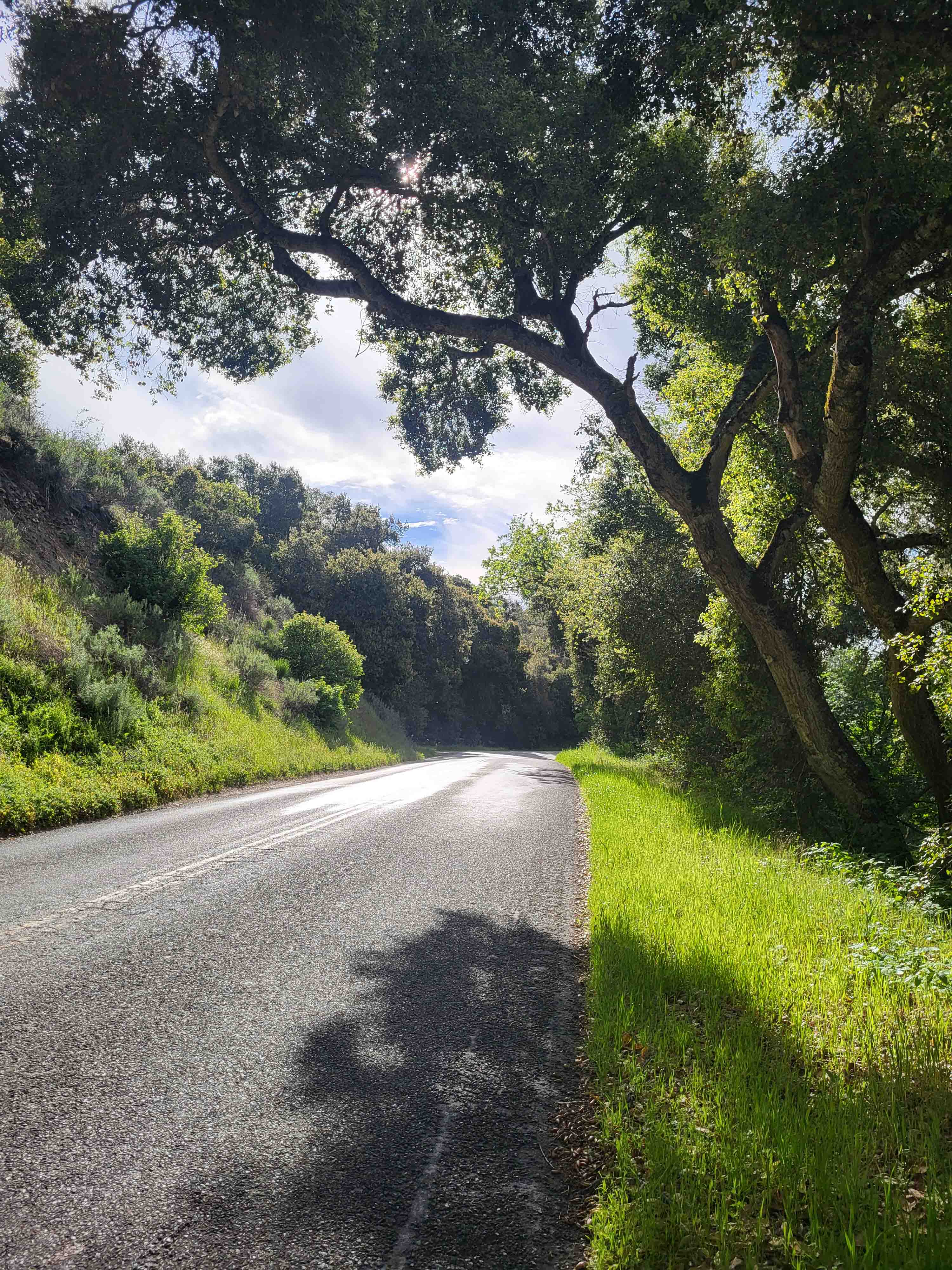
It's January, and the snow is flying in Colorado - a good time to be inside planning, so it's time to take a look at this year's Grand Randonnées!
Eight US Grand Randonnées are scheduled for 2025:
Route Shapes ... and Logistics - Three are four-loop events, which have become more and more popular. The start, finish, and intermediate overnights are all at the same venue. The advantages for riders and organizers are the same: easier logistics, and easier to support. The "two-loop" events have many of the same advantages, with the three intermediate overnight checkpoints at the same spot.
At the other end of the spectrum is point-to-point (such as Seattle to San Francisco), where riders need to think about getting back to the start, or home.
♦ ♦ ♦
Here are "award motivations" for riding a Grand Randonnée:
Finish two US grand randonnées in the same year.
Finish four different US grand randonnées - over any number of years
Finish a US grand randonnée, a populaire, a team event, 200k, 300k, 400k, 600k, and 1000k, and enough extra to add up to 5000 km in 24 months. (Extra time allowance for series spanning Covid timeframe.)
Finish PBP, another grand randonnée, two Super-Randonneur series (with 1000k's), an additional ACP 600k brevet with at least 8,000 m (26246 ft.) of climbing, a Fl
èche, and other ACP/RM events within six years.
(Extra time allowance for series spanning Covid timeframe.)RM Challenge LepertelA 1200 km or longer event in each of 4 consecutive calendar years, one of which must be PBP.
And now details on the US grand randonnées ...
The
Golden Falcon: The Prince Awakens is organized by the Northeast Florida Randonneurs, led by Hamid Akbarian, who is also RBA of the Northern Virginia region and organizing the Endless Flat1200 in 2025 as well. This year's route is new, as is the tradition with this event. We should expect easy logistics for riders, since the route is a cloverleaf, and limited support during the event, mainly at the overnight venue. (The event is designed to be self-supporting.) About the name: the event page says, "The Golden Falcon symbol was used during the first dynasty of Persian Empire to recognize the freedom of all the people under the Persian Empire, especially women & minorities."
♦ ♦ ♦
The
Endless Flat 1200 is new for 2025. And a big departure from previous Northern Virginia "climby" 1200k's such as the Treasure Cove, Shenandoah, and North Virginia Cloverleaf. The new prelim route has about 15,200 ft. of climbing (per RideWithGPS), compared with 22,000 ft. for the Colorado Last Chance. The website says, "The route is pretty flat. The event is designed to be a party ride and an introduction to 1200km for the 1st timers." Possibly the first time a grand randonnée has been promoted as a party ride. There are three overnights with meals and lodging provided.
♦ ♦ ♦
The Garden State 1200k is new for 2025. It is four loops starting near Princeton. It is unsupported, and there are no qualifying requirements. 200k, 300k, 400k, 600k and 1000k brevets are also offered concurrently with this event. The organizers, Paul Kramer and New Jersey Randonneurs, are experienced, having run the New York - Montreal - New York 1200k last year. There are many pastoral and historic areas of New Jersey, so the ride has promise as a good riding experience. ♦ ♦ ♦
The
Colorado Front Range 1200 is back for its second edition. It's a four-loop format based out of Louisville, CO, with the loops skewed to avoid population centers. It's a mix of canyons, Front Range mountains, and plains riding. This year's route features segments on the Peak-to-Peak Highway, and some extra canyon variety. Expect light event support but a scenic and challenging, and doable and fun event.
♦ ♦ ♦
The Humboldt Coast 1200 is a new event organized by the Humboldt Randonneurs. The route is point-to-point RM starting in Eugene, OR and finishing in Petaluma, CA. Much of the route is near or on the Pacific Coast.
♦ ♦ ♦
This is the 7th edition of the
Gold Rush Randonnée, featuring a beautiful and rugged exploration of Northern California, including the Feather River Canyon. The GRR is the second oldest US Grand Randonnée, dating back to 2001. Davis Bike Club provides excellent and comprehensive support, with plenty of staff and a numerous sleep venues, so you can tailor your own ride, or adapt as you go. [This based on prior editions. Details for this year's event have not yet been posted.]
♦ ♦ ♦
Seattle to San Francisco - organized by Seattle International Randonneurs - is a point-to-point grand randonnée with no support and extending for about 1720 km.
♦ ♦ ♦
The Endless Mountains Liberty Bell 1234k should be like last year's event, a revival of the Endless Mountains 1200k previously held in 2013, but with an added Philadelphia historical aspect. The organizer intone, "This is a challenging ride, not for beginners." The preliminary route has 42,000 ft. of climbing (RideWithGPS), which is hefty but manageable.
♦ ♦ ♦
Foreign Grand Randonnées
Have a look at the
Les Randonneurs Mondiaux calendar for 2025 for listings of Grand Randonnées worldwide. This year's event list offers organizers' notes, which in some cases are detailed and helpful. Countries offering many events:
- 24 in India
- 13 in Australia
- 8 in the US
Some of these could be really evocative events and something new for you!
♦ ♦ ♦
In particular, there is the Granite Anvil, starting August 20, from Barrie, Ontario, about 55 miles north of Toronto, avoiding urban congestion. This year, the Granite Anvil offers 1000k, 1200k and 1300k options. Three overnights will be in Bancroft, making for convenient logistics. Our friend Dave Thompson always organizes a superb grand randonnée, so have a look!
♦ ♦ ♦
Choosing and Riding a Grand Randonnée
My traditional advice ...
While all grand randonnées aim to provide you a memorable experience, there are many styles of events, kinds of challenges, services, and what you get for your fee. So investigate and find which ones suit your personal goals!
Scenic and Challenging or Social ... or All of the Above? - Each of these events is challenging, of course, and any can be social with the right attitude and discipline. But it can be easier to stick together as a group if the route is more moderated in its climbs, exposure, etc. Riding with a group may be important to you. Or you may be longing for that special, bracing experience, and willing to ride stretches alone or with a few friends who've agreed to stick together.
Your Ride Plan? - Some events provide a pretty definitive idea of where you should sleep. Others provide some accommodations at a number of controls. Still others leave you totally to your own devices.
» Stage-Oriented events have suggested riding segments per day, with overnight facilities provided at the ends of those segments. They have become more popular over the years. This scheme promotes rider cohesiveness, and allows riders to regroup on successive morning starts. They also allow the organizers to concentrate their lodging and food support at fewer points, making for upgraded lodging options and cost savings.
» "Freestyle" events come in variations on two themes: many staffed controls with sleep options (some of which may be limited, but still a place to sleep), such as Paris-Brest-Paris and the Rocky Mountain 1200; or no event-provided lodging, leaving you to research ahead of time, and make your own arrangements based on your ride plan, likely with a more economical entry fee.
It can be satisfying to tune your ride to how things are going, or to your own personal way of riding. It can also be comforting not to have to think about that, and just ride well-thought-out stages.
Pre-visualize how you'd ride the event you've chosen or are considering, and how the event structure supports or can accommodate your needs.
Services / Lodging Provided? - Are there regular opportunities to get food (either event-supplied or in stores) and shelter / lodging (either event-supplied or motels en route)? The Big Wild Ride 1200k in Alaska, for example, advised riders there could be stretches up to 200km where you'd need to be self-contained (except for water). This requires more planning on your part, but the reward could be a remote, scenic trip hard to match.
Effort and Expense - Finally, while it may not affect which event you choose, research the total cost of riding the event. The entry fee may a small part, when added to transportation and lodging - and the logistics of getting to the start line and back home. International events clearly can be more trouble and expense, and some US events are easier to get to than others, too. If it's a trade-off between economizing and the exotic, you may find the new or exotic worth the extra cost and trouble, or not. It all depends!
- - -
Plenty to whet your appetite and take you to new places in 2025. So start imagining, planning, ... and training!
-jle